Blog

Latest Articles

16 posts

FDA Section 524B Explained What Device Makers Must Submit in 2026
FDA Cybersecurity

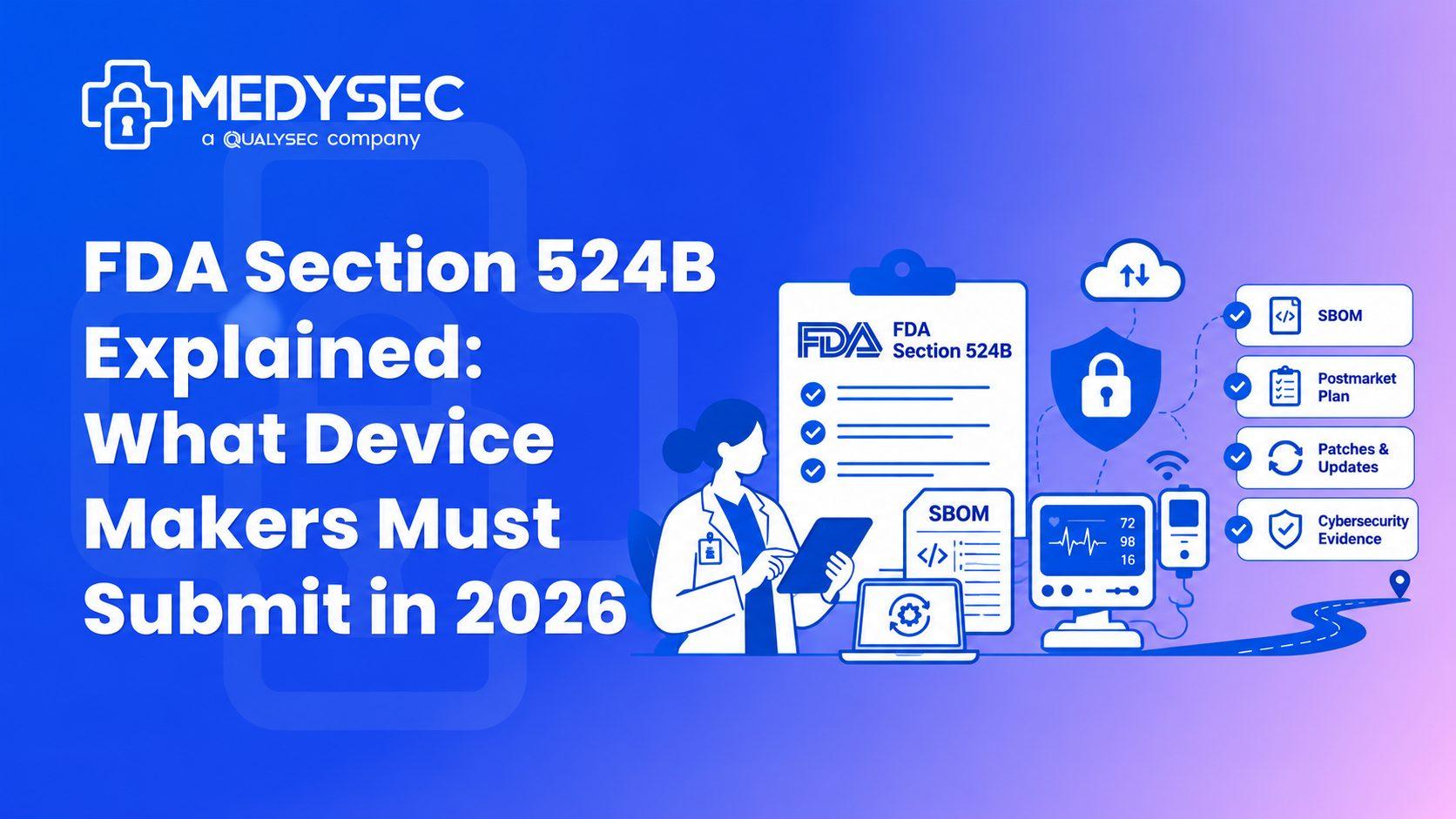
FDA Section 524B Explained: What Device Makers Must Submit in 2026

This guide explains FDA Section 524B requirements for cyber devices, including SBOMs, vulnerability management, cybersecurity processes, penetration testing, supporting documentation, and premarket submission readiness in 2026. It covers FDA expectations and common compliance gaps.

Read More
What Documentation Is Required for an FDA 510(k) Submission Complete 2026 Guide
FDA Cybersecurity

What Documentation Is Required for an FDA 510(k) Submission? Complete 2026 Guide

FDA 510(k) submissions require detailed administrative, technical, and performance data to prove substantial equivalence. For connected medical devices, robust cybersecurity documentation such as threat models, SBOMs, pentest reports, and risk plans is vital to prevent regulatory delays.

Read More
Aligning Medical Device Architecture with NIST Cybersecurity Frameworks
Medical Device Cybersecurity

Aligning Medical Device Architecture with NIST Cybersecurity Frameworks

Look into NIST medical device cybersecurity and discover the ways in which the manufacturers can protect their devices by using secure architecture and managing risks.

Read More
FDA U.S. Agent for Medical Devices in 2026 Requirements, Registration, Responsibilities and Fees
FDA Cybersecurity

FDA U.S. Agent for Medical Devices in 2026: Requirements, Registration, Responsibilities and Fees

One agent per foreign establishment; U.S. physical presence required; confirmation within 10 business days; no automatic responsibility for 510(k) submissions or adverse event reporting. Appointment does not replace device clearance, listing, quality system obligations, or cybersecurity evidence.

Read More
MDCG 2019- 16 Guidance on Cybersecurity for Medical Devices
Compliance

MDCG 2019- 16 Guidance on Cybersecurity for Medical Devices

MDCG 2019-16 Rev. 1 provides advisory cybersecurity guidance for EU MDR and IVDR medical devices. It outlines eight lifecycle security practices, risk assessment strategies, testing methods, and technical documentation to protect patient safety and ensure regulatory compliance.

Read More
How to Prepare an SBOM for FDA 510(k) Submissions
FDA Cybersecurity

How to Prepare an SBOM for an FDA 510(k) Submission?

An SBOM is a statutory requirement under Section 524B for 510(k) cyber device submissions. Based on NTIA baseline fields, it tracks software components, dependencies, and support dates. Combined with vulnerability assessments, a verified SBOM ensures FDA compliance and postmarket safety.

Read More
How to Build an FDA-Compliant Software Bill of Materials (SBOM)
FDA Cybersecurity

How to Build an FDA-Compliant Software Bill of Materials (SBOM)

Understand FDA software bill of materials (SBOM) requirements for medical devices, including Section 524B compliance, software component identification, accepted formats, and cybersecurity vulnerability management.

Read More
Navigating FDA Premarket & Postmarket Cybersecurity Requirements
FDA Cybersecurity

Navigating FDA Premarket & Postmarket Cybersecurity Requirements

FDA premarket and postpostmarketmarket cybersecurity requirements, Section 524B requirements, SBOMs, pen testing, and vulnerability management can assist medical device makers in ensuring security and compliance.

Read More
Medical Device Cyberattacks Real-World Threats, Patient Safety Risks, and Prevention Strategies
Medical Device Cybersecurity

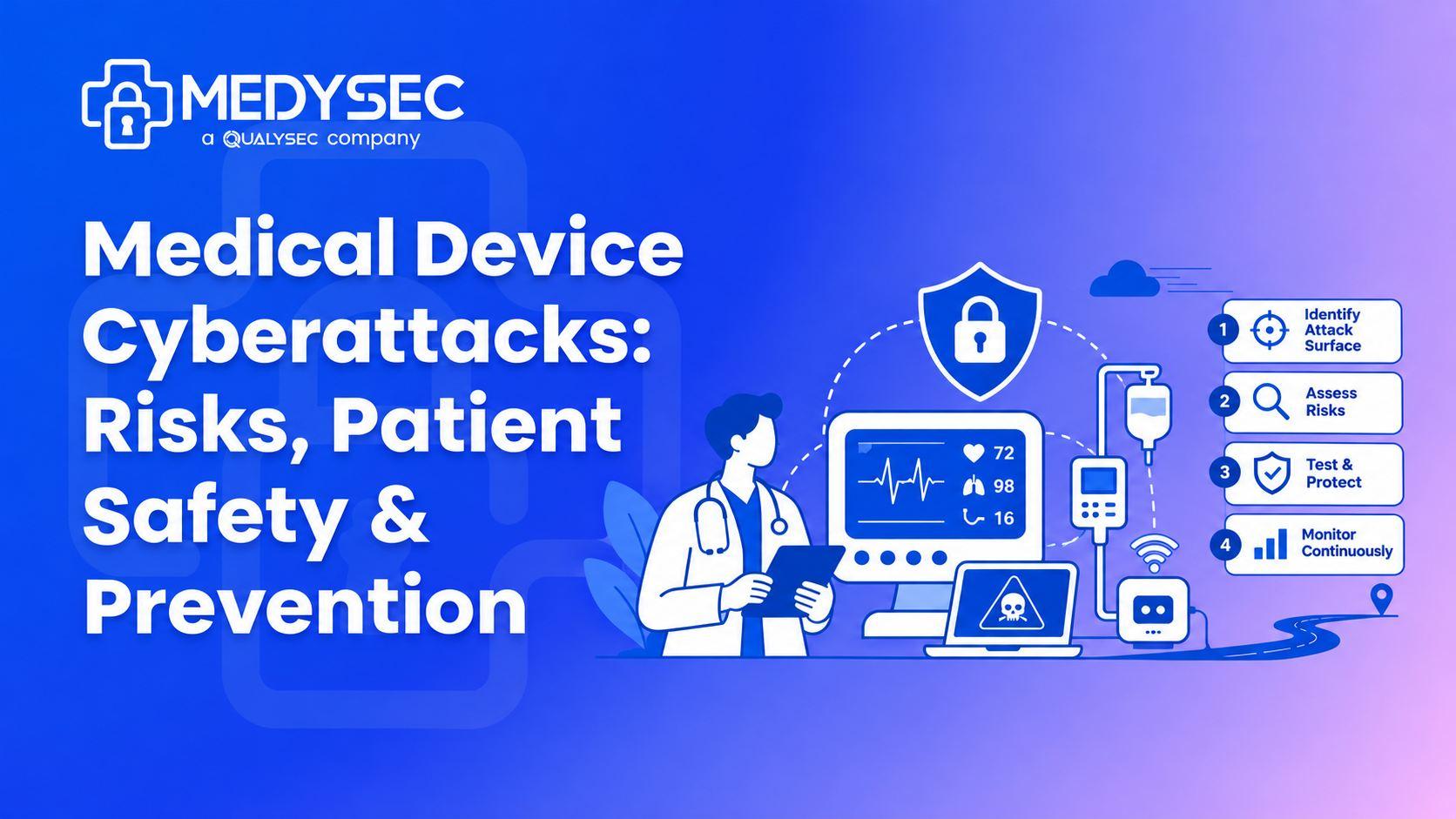
Medical Device Cyberattacks: Real-World Threats, Patient Safety Risks, and Prevention Strategies

Preventing medical device cyberattacks requires secure product architecture, threat modeling, penetration testing, software component visibility, and a coordinated response process after deployment.

Read More
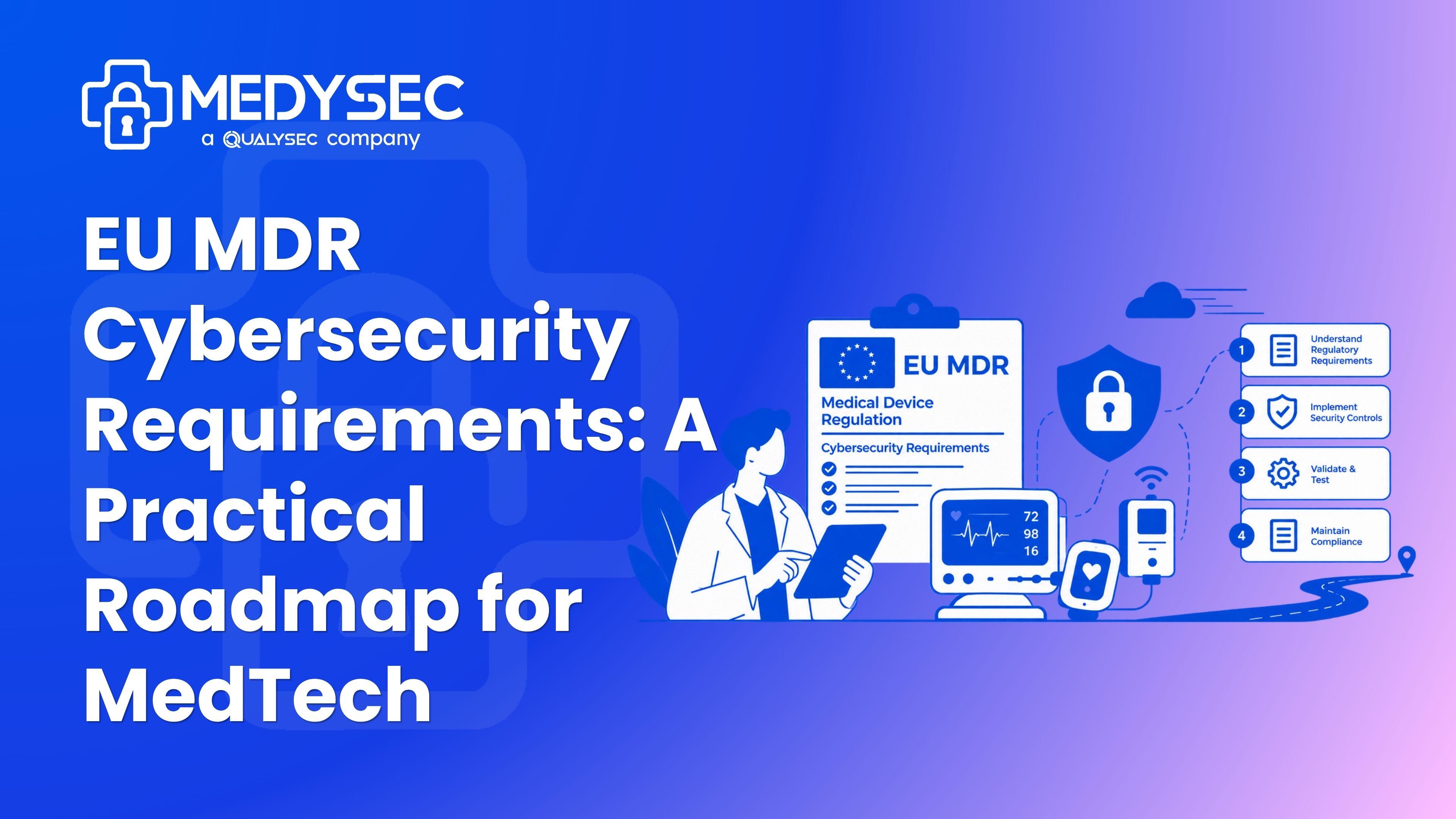
EU MDR Cybersecurity Requirements A Practical Roadmap for MedTech
Compliance

EU MDR Cybersecurity Requirements: A Practical Roadmap for MedTech

EU MDR cybersecurity requirements help medical device manufacturers ensure device safety, protect patient data, and manage security risks. Learn about compliance steps, penetration testing, technical documentation, and postmarket surveillance with Medysec.

Read More
Mitigating Risks in Healthcare IoT Infrastructure
Medical Device Cybersecurity

Mitigating Risks in Healthcare IoT Infrastructure

Healthcare IoT cybersecurity protects connected medical devices, hospital networks, and patient data from cyberattacks. Explore key risks and strategies to strengthen infrastructure security, protect patients, and help medical device manufacturers identify vulnerabilities with Medysec.

Read More
Medical Device Cybersecurity Architecture, Best Practices & Protocols
Medical Device Cybersecurity

Medical Device Cybersecurity: Architecture, Best Practices & Protocols

This guide explores medical device cybersecurity architecture, potential threats, and secure communication protocols to protect medical devices and patient data. It also covers cybersecurity testing, FDA requirements, risk management, and post-market security practices.

Read More
Best Practices for Medical IoT Device Security in Modern Clinical Environments
Medical Device Cybersecurity

Best Practices for Medical IoT Device Security in Modern Clinical Environments

Medical IoT device security protects connected equipment, software, and networks from cyber threats. By implementing inventory tracking, risk assessments, and network segmentation, healthcare teams maintain patient safety and continuous clinical care.

Read More
The Ultimate Guide to FDA Cybersecurity Guidelines for Medical Devices
FDA Cybersecurity

The Ultimate Guide to FDA Cybersecurity Guidelines for Medical Devices

Read more about the new FDA guidance on cybersecurity for medical devices in 2026, including section 524B standards, software bill of materials, penetration testing, premarket and postmarket submissions, etc.

Read More
Understanding IoMT Cybersecurity Protecting Connected Healthcare IoT Devices
Medical Device Cybersecurity

Understanding IoMT Cybersecurity: Protecting Connected Healthcare IoT Devices

Connected medical devices improve modern healthcare but face severe cyber threats. Protecting these systems requires complete asset inventories, network segmentation, careful patch management, and strict access controls to successfully maintain patient safety.

Read More
The Importance of Cybersecurity in the MedTech Industry
Medical Device Cybersecurity

The Importance of Cybersecurity in the MedTech Industry

Medical device cybersecurity protects health data from cyber threats. Secure design, testing, SBOM management, and vulnerability monitoring support safety. Meet FDA Section 524B, EU MDR/IVDR, HIPAA, and GDPR requirements.

Read More